Disorders

  • malocclusion
  • class I malocclusion
  • class II malocclusion
  • class III malocclusion
  • crowding and crooked teeth
  • crossbite
  • impacted teeth
  • midline discrepancy
  • missing teeth
  • overbite
  • overjet
  • diastema
  • supernumerary (extra) tooth
  • spacing
  • peg teeth
  • rotated teeth (rotations)
  • incorrect angulations
  • submerged primary teeth
  • openbite
  • retruded lower jaw
  • prominent lower jaw

Malocclusion

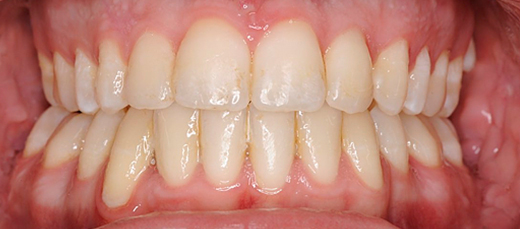
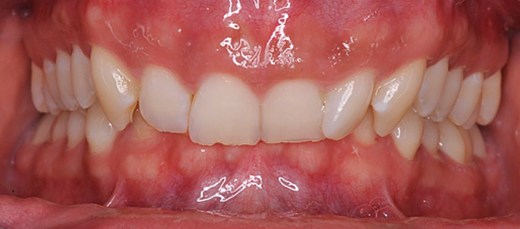
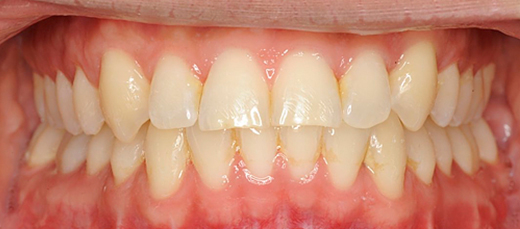
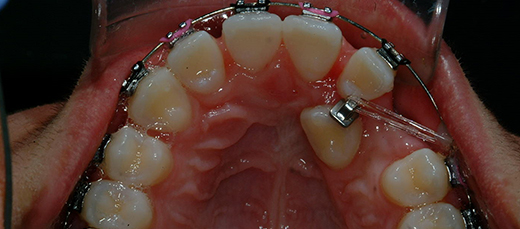
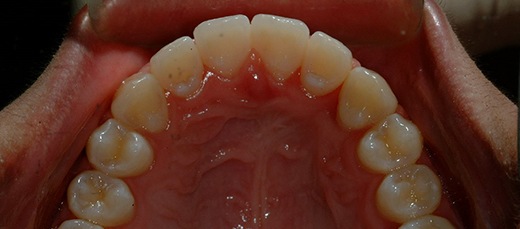
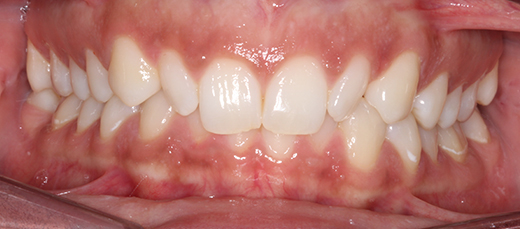
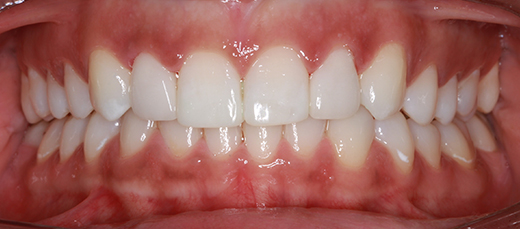
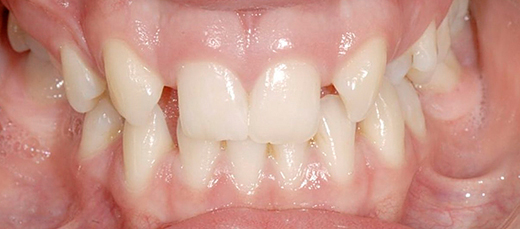
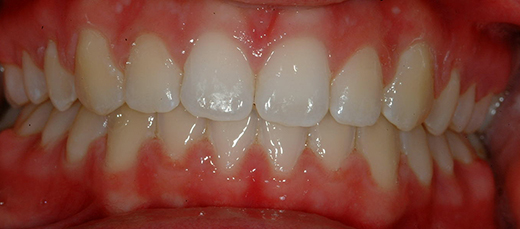
"Malocclusion" is a general term that we use to describe a mismatch of tooth size, jaw size and the way that teeth fit together, one jaw with the other. In general terms there are a number of things that can contribute to a "malocclusion". From our clinical examination, we have identified some of the major factors contributing to your malocclusion and photographs to illustrate the problem requiring treatment are provided.

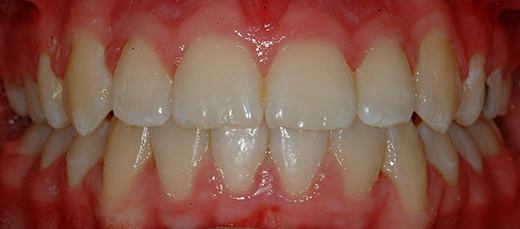
Ideal Occlusion

class I malocclusion

The jaw relationship is relatively normal but your teeth may be very crowded and unattractive.

Class 1 malocclusion

class II malocclusion

This is an overjet (commonly called an overbite). This is where a discrepancy lies between the upper and lower jaws (usually the lower jaw has not kept the same rate of growth as the upper jaw).

Class 2 malocclusion Class 2 malocclusion a

class III malocclusion

An under-bite. This can be a result of the upper jaw not keeping the same rate of growth as the lower jaw and/or the lower jaw is growing forward in excess.

Class 3 malocclusion Class 3 malocclusion a

Crowding / Crooked Teeth

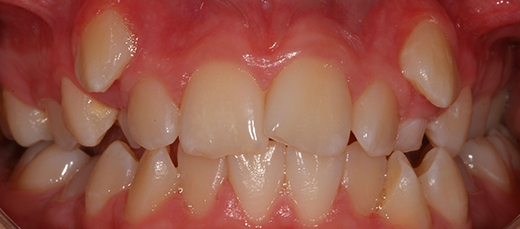
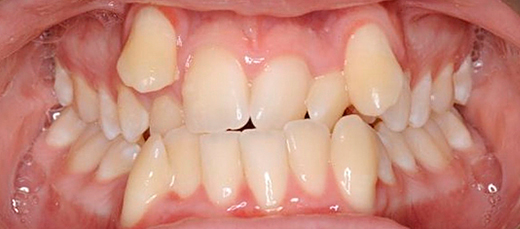
Crowding presents itself as a general overlap of teeth in each jaw. You can see from the photographs the generalised overlapping of teeth and the extent of the crowding. Crowding results from a number of factors, one of which is hereditary. Genetically, we find examples of large teeth accompanied by a small jaw where the teeth won't all fit, but they continue to erupt and overlap each other.

Crowding may also occur due to environmental factors such as premature loss of deciduous (baby) teeth either from decay, extraction or sometimes, early natural loss. This allows the permanent teeth in the back part of the mouth to crowd forward resulting in a lack of space for other permanent teeth. Just as there is early loss of deciduous teeth, prolonged retention of the primary teeth can deflect the permanent teeth from their normal eruption path, resulting in crowding.

crowding crooked crowding

Crossbite

A crossbite is a positional problem, where one or more of opposing upper and lower teeth bite on the wrong side of each other.

This may affect either the front or the back teeth.

In the growing child these crossbites may affect the growth pattern of either jaw and may cause a permanent skeletal change.

The cause of crossbites may result from a number of factors:
hereditary factors or individual growth patterns; environmental factors such as the early loss or prolonged retention of deciduous (baby) teeth, thumb sucking or trauma may result in these functional bite disturbances.

crossbite

Impacted Teeth

During the normal eruption pattern, the permanent teeth generally dissolve the roots of the deciduous (baby or primary teeth) as they erupt into the mouth. The end result is that the baby teeth fall out and are replaced almost immediately by the permanent successor.

Sometimes, however, the permanent teeth loose their normal path of eruption into the mouth and track off in an abnormal direction, where they fail to erupt. These are termed "impacted". The end result is a failure of the baby tooth to be lost and the permanent successor remains under the gum. The unerupted (impacted) tooth then has the potential to dissolve the roots of the tooth it comes in contact with and not uncommonly this is an adjacent permanent tooth, with drastic results.

Impacted teeth can be a genetic trait with the incidence more common in females than males 2:1 and are closely associated with missing or very small lateral incisor teeth (the second upper front tooth).

The most common impacted tooth is the upper 'eye' or cuspid tooth.

impacted xray

Midline Discrepancy

The midline of our upper and lower teeth should coincide. A discrepancy of this midline is when the middle of the upper and lower teeth do not align. This can be due to the upper or lower teeth moving to the left or right or a combination of both.

Various factors can result in a midline shift such as the premature loss of baby teeth, retained baby teeth, crowding and missing teeth.
midlines

Missing Teeth

The number of teeth affect the look or aesthetic appearance of the smile and the function of the jaws and the teeth.

In cases of missing anterior (front) teeth, symmetry plays an important role in whether it is best to have a missing tooth/teeth replaced or the space of the missing tooth closed.

Missing teeth may result from hereditary causes (quite common) or environmental factors such as decay, accidents where teeth may have been knocked out, or the failure of teeth to erupt and become "impacted".

missing teeth 

Overbite

Overbite is the amount of vertical overlap of the upper and lower front teeth when the back teeth are biting together. In some cases there may be little or no lower teeth showing. Ideally the upper front teeth should overlap the lower teeth by 2-3mm.

An unusual overbite may result from a variety of factors: hereditary factors or individual growth pattern; environmental influences such as thumb sucking, mouth breathing, premature loss of deciduous (baby) teeth or lack of contact between the upper and lower front teeth may affect the amount of overbite present.

overbite deep

Overjet

Overjet is the size of the horizontal space between the upper and lower front teeth when the back teeth are biting together. You can see from the photographs just how prominent the front teeth are. Ideally the upper and lower front teeth should touch each other.

The increase in overjet may result from a number of factors: hereditary factors or the individual growth pattern; environmental factors such as thumb sucking; or lower lip sucking, and trauma to either the teeth or jaws may affect the amount of overjet present.

This space between the upper and lower front teeth may be as a result of the top teeth (jaw) being too far forward, or the lower teeth (jaw) being too far back (retrusive), or a combination of both.

overjet

Diastema

A diastema is a space between two teeth and is commonly between the front incisor teeth (as shown).

A diastema is often found in association with a fibrous band of tissue call a frenum. The frenum attaches itself from the inner surface of the lip, cheek or tongue, to the lingual (inside) surface of the mouth. In some cases this fibrous band is quite thick and contributes to the spacing of the teeth. A fraenectomy (removal of frenum tissue) can be performed to remove this fibrous band sometimes resulting in the closure of diastema. The use of orthodontic appliances may also be required.

diastema

Supernumerary (extra) Tooth

A term used to describe a tooth which is in addition to the normal number of teeth (extra tooth).

Commonly found in the anterior (front) section of either the upper or lower jaws.

supernumerary

Spacing

Excessive space between permanent teeth presents itself as unsightly gaps and may require closure to improve tooth function, bite and aesthetics.

The excessive spacing may result from a number of factors.

Normal sized teeth in large jaws or small teeth in normal sized jaws may cause excessive spacing. If there are missing teeth, excessive spacing is also likely.

spacing

Peg Teeth

Peg lateral is the term used to describe lateral incisors which have developed a smaller and/or a abnormal shape to the normal lateral incisor.

It is believed to be a genetic trait and very little is known why lateral incisors develop in this unusual shape and why it is mainly lateral incisor teeth which are affected. Peg laterals can be modified by the dentist making the peg tooth/teeth more realistic to the normal dimensions.

peg teeth

Rotated Teeth (Rotations)

Teeth which are not correctly aligned around the dental arch are referred to as rotated teeth.

Apart from being unsightly they may create gum problems, as food will trap into the unusual areas/spaces created between the teeth.

rotation.jpg

Incorrect Angulations

Angulations of teeth refer to the alignment of the long axis of the teeth in a line from the chewing surface along the root.

Incorrect angulations may be caused by lack of space for the tooth to erupt or it may mean that something in the jaw is causing the tooth to tilt. Some examples of this would be a retained baby tooth, an extra tooth or a cyst.

incorrect angles

Submerged Primary Teeth

When baby teeth do not erupt along with the adjacent adult teeth, the baby teeth seem to submerge.

This can become severe enough for the baby teeth to eventually be covered by gum tissue. If this occurs, the adjacent permanent teeth may tilt over the submerged baby tooth/teeth and create localized crowding.

submerged primary

Openbite

An openbite refers to a vertical open space when the upper teeth do not overlap the lower teeth at all. Ideally the upper front teeth should overlap the lower teeth by 1.5 - 2 mm.

Openbites may result from environmental factors such as thumb/finger sucking, tongue thrust swallowing, mouth breathing and pacifiers.

openbite 

Retruded Lower Jaw

The lower jaw can be retrognathic (retruded). A disproportionate growth rate between the upper and lower jaws may result in this appearance.

Correction of this problem can involve a growth modifying appliance which promotes growth in the lower jaw allowing it to "catch up" with the upper jaw.

In a non-growing patient, correction often involves jaw surgery.

retrognathic jaw

Prominent Lower Jaw

The lower jaw can be prognathic (prominent) which means its growth has exceeded that of the upper jaw.

Correction of this problem can involve a growth modifying appliance which slows down or holds the growth in the lower jaw allowing it to "catch up" with the upper jaw. In a non-growing patient, correction often involves jaw surgery.

proganthic jaw

Click here for information on Corrections , Treatment , Oral Hygeine and New Patient Treatment

Contact us via email or phone us on 03 5221 6677.